AI Governance & Security

Artificial intelligence is transforming how organisations work. Tools such as ChatGPT, Microsoft Copilot and AI agents are already automating tasks ranging from document summarisation to data analysis and workflow automation.

However, many organisations are adopting AI without the necessary governance, security and compliance foundations in place.

Employees may unknowingly upload sensitive data, bypass existing security controls or use AI tools that operate outside the organisation’s security environment.

This raises a critical question:

How can organisations harness the power of AI while protecting their data, systems and reputation?

The answer lies in strong AI governance, security and responsible deployment.

Why AI Governance Matters

AI has enormous potential to improve productivity, accelerate decision-making and unlock new operational efficiencies.

But deploying AI without the right governance framework can introduce significant risks across the organisation.

Uncontrolled Data Access

Sensitive information may be exposed if AI systems retrieve data without appropriate permissions.

Data Leakage

Employees may unintentionally share confidential information with external AI tools.

Compliance Exposure

Unregulated AI usage may create legal or regulatory risks.

Unreliable AI Outputs

AI systems can generate inaccurate or misleading results without proper validation.

Security Vulnerabilities

New AI systems introduce additional attack surfaces that must be secured.

Loss of Trust

Poorly governed AI usage can damage stakeholder confidence and organisational reputation.

Before organisations scale AI across their business, these risks must be addressed.

The Foundations of Secure AI

Successful AI adoption relies on clear governance and robust security controls.

Establishing the following foundations allows organisations to deploy AI safely and scale responsibly.

1

Data Governance

Organisations must understand where their data resides and how it is classified. AI systems should only interact with governed and protected data sources.

2

Identity & Access Control

AI must operate within existing identity frameworks, ensuring that information access respects established permissions.

3

Security & Compliance

AI deployments should align with cybersecurity frameworks, regulatory obligations and internal compliance policies.

4

Responsible AI Policies

Clear internal policies define which AI tools are approved, how data can be used and where human oversight is required.

5

Monitoring & Oversight

AI activity should be continuously monitored through logging, governance reporting and policy enforcement.

AI governance is an ongoing capability, not a one-time exercise.

The 7 Biggest AI Security Risks Organisations Face

As AI adoption accelerates, new security and governance challenges are emerging.

Understanding these risks helps organisations adopt AI safely.

1

Shadow AI

Employees are using AI tools outside IT oversight, potentially uploading sensitive documents or analysing data with external services. This widespread practice can expose confidential information without proper governance.

2

Data Leakage Through AI Prompts

Many users inadvertently paste sensitive data into AI tools when asking questions. Research indicates that 77% of employees admit to sharing confidential financial data, contracts, or customer information, leading to significant exposure risks.

3

AI-Powered Phishing Attacks

Cybercriminals leverage AI to generate highly convincing phishing emails and impersonation attempts. This dramatically lowers the barrier for creating sophisticated scams, underscoring the need for strong identity security and employee awareness.

4

Prompt Injection Attacks

Malicious actors attempt to manipulate AI systems into revealing confidential information or bypassing safeguards. As organisations deploy AI agents and automated workflows, this becomes a growing concern for data integrity and system security.

5

AI Agents Acting Beyond Their Permissions

AI agents can retrieve data and perform tasks across various systems. Without robust identity controls, they might gain unintended access to sensitive information, making identity-first security essential for AI deployments.

6

Lack of AI Governance Policies

Organisations are rapidly adopting AI tools without implementing adequate governance policies. This absence of frameworks leads to uncontrolled AI usage across departments, increasing overall risk exposure.

7

Expanding Cyber Attack Surface

AI introduces new technical components, including models, APIs, and automation workflows. Each component expands the potential attack surface, requiring security teams to ensure these systems are rigorously governed and monitored.

Human Oversight Remains Essential

Even advanced AI systems should operate with appropriate human oversight.

AI should augment human decision-making rather than replace it.

Augmented Decision-Making

AI supports intelligent decision-making, complementing human judgment rather than replacing it. This synergy ensures informed, nuanced outcomes.

Ensured Accountability

AI supports intelligent decision-making, complementing human judgment rather than replacing it. This synergy ensures informed, nuanced outcomes.

Maintained Control

Organisations retain ultimate control over their AI systems, ensuring alignment with strategic objectives and enabling swift intervention when necessary.

Responsible AI adoption always keeps people at the centre of the process, ensuring technology serves human values and organizational goals.

Governance First. Then Scale.

Organisations that successfully integrate AI follow a clear, strategic path. This journey prioritises foundational elements before scaling, ensuring responsible and secure adoption.

1

Governance & Security

Set policies, risk controls, and compliance

2

Productivity Tools

Introduce AI assistants and collaboration aids

3

Identify Automation

Map processes suitable for automation

4

Deploy AI Agents

Implement agents for targeted workflows

5

Scale Capabilities

Set policies, risk controls, and compliance

Why Organisations Partner with Managed AI Providers

Adopting AI demands expertise across data governance, cybersecurity, cloud architecture, and operational workflows. Organisations must ensure AI operates safely within existing systems, data environments, and security frameworks.

This is why many organisations turn to Managed AI Providers for their AI journey.

System Connectivity

Managed providers understand how your diverse systems are interconnected and integrated.

Data Residency

They know where your sensitive data resides and how it is protected within your infrastructure.

Identity & Access Controls

Expertise in managing identity and access ensures AI respects established permissions.

Secure Deployment

They possess the deep operational knowledge to deploy new AI technologies securely and effectively.

This unique position enables them to help organisations adopt AI safely, strategically, and at scale.

JERA IT Your Managed AI Partner

Behind this AI & Automation Hub is Jera IT — an Edinburgh, Aberdeen and Glasgow-based team of IT, cyber security and AI specialists helping Scottish businesses adopt AI safely, practically and with real governance built in from day one.

We’re not an AI consultancy that arrived when AI became fashionable. We’re a managed IT provider with 30 years of experience managing Scottish business technology — which means we already understand your infrastructure, your data environment, your security posture, and the compliance obligations your sector operates under. That’s the foundation that makes safe AI adoption possible.

We combine deep expertise in Microsoft technologies, cyber security and cloud infrastructure with practical experience deploying Microsoft Copilot, automation workflows, AI agents and intelligent knowledge systems — and we measure the results using our own OI Scoring system, so you can see exactly what AI is delivering across your business, by department, in plain numbers.

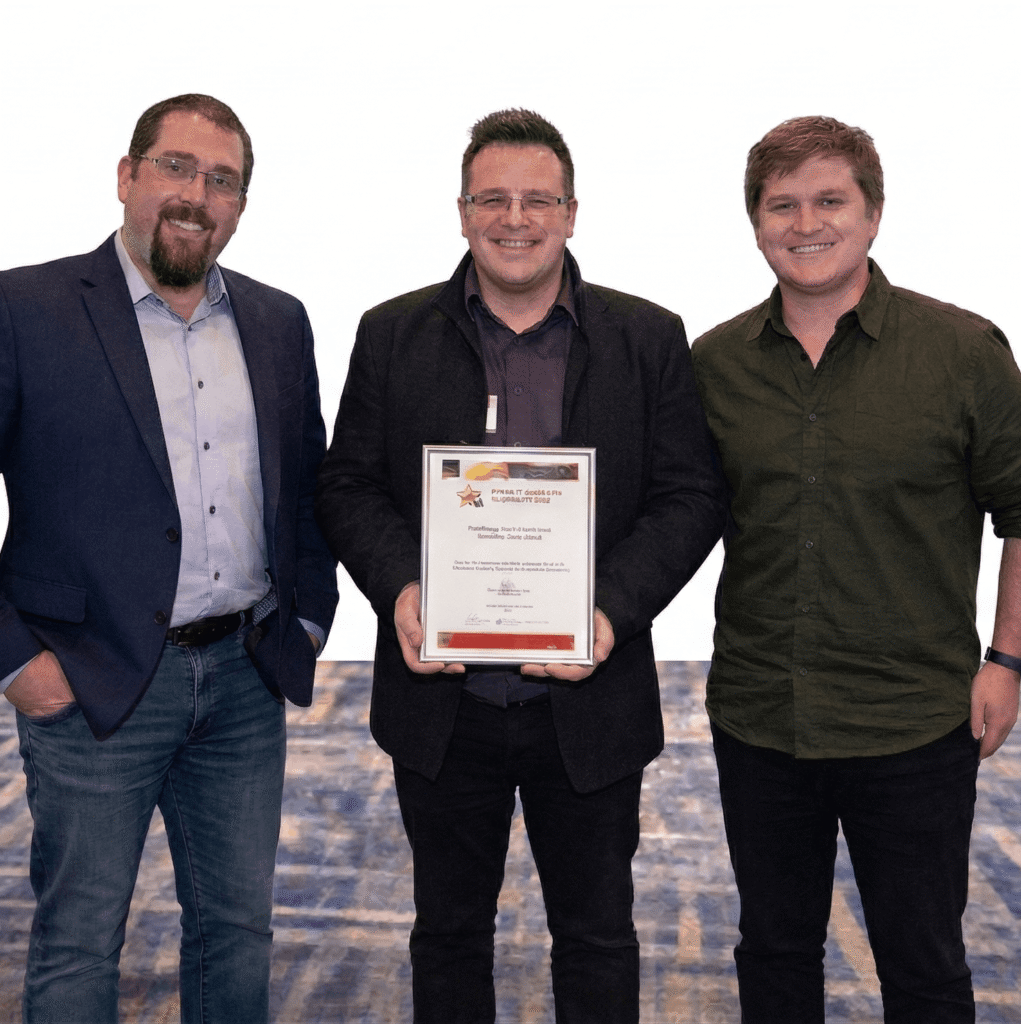
Why Organisations Work With Us

Choosing the right partner for AI adoption is critical.

Successful AI programmes require both strategic guidance and practical implementation expertise.

Scotland's only MSP with a dedicated AI Adoption Programme

The Jera AI Readiness Programme is the only structured AI adoption service built specifically for Scottish businesses — covering readiness assessment, governance, deployment, and measurable outcomes. No other Scottish MSP offers this end-to-end.

Microsoft Solutions Partner with deep security expertise

We’re a Microsoft Solutions Partner and Cyber Essentials Plus certified — meaning your AI deployment is built on a properly secured Microsoft 365 environment, with data governance and access controls in place before a single AI tool goes live. We achieve an average Microsoft Secure Score of 74% for our clients, against an industry average of 31%.

AI governance isn't an add-on. It's how we start.

Every Jera AI engagement begins with governance and security. We map your data, establish access controls, identify shadow AI exposure, and deploy Copilot within your own Microsoft 365 tenant — so your client data, your IP, and your commercially sensitive information never enters a public AI model.

We measure what AI is worth using OI Scoring

Most AI programmes claim productivity gains. Jera proves them. Our Operational Intelligence Scoring system measures time saved by department across your business — giving you a clear, auditable return on your AI investment that you can present to your board, not just believe in.

Three Scottish offices. Onsite when you need us

Edinburgh. Aberdeen. Glasgow. When AI deployment needs hands-on support — training your team, configuring your environment, embedding tools into how people actually work — we’re already here. Not a remote team based in Manchester or London who visits quarterly.

Training Scotland's next AI professionals

Through the Jera IT Academy, we’re actively investing in Scotland’s AI and cyber security talent pipeline — training the next generation of specialists. That means our knowledge of what’s coming in AI is current, deep, and built from the ground up, not sourced from vendor briefing notes.

Start with Responsible AI

AI will transform how organisations operate over the coming years.

The question is not whether businesses will adopt AI, but how they will do so safely and responsibly.

With the right governance and security foundations, AI can become one of the most powerful tools available to modern organisations.

Ensure Your Organisation Is Ready for AI

Identify AI opportunities, governance gaps and security risks across your organisation.